Plantar Warts
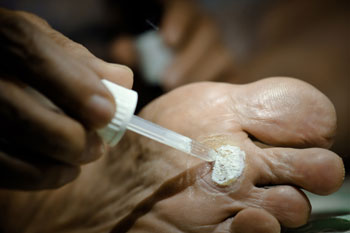
Plantar warts are common skin lesions that develop on the soles of the feet. They are caused by a viral infection and often appear as small, rough growths that may be painful when walking or standing—especially when located on weight-bearing areas such as the heel or ball of the foot.
What Causes Plantar Warts?
Plantar warts are caused by the human papillomavirus (HPV), which enters the skin through tiny cuts or abrasions. The virus thrives in warm, moist environments and can be contracted through direct contact. Common sources include:
- Public pools, locker rooms, and communal showers
- Walking barefoot in shared spaces
- Direct contact with contaminated surfaces
Not everyone exposed to HPV will develop warts. Susceptibility can depend on factors such as immune system response, skin integrity, and frequency of exposure.
Signs & Symptoms
Plantar warts may present as:
- Small, grainy growths on the sole of the foot
- Thickened skin (often mistaken for a callus)
- Black pinpoint dots (clotted blood vessels)
- Pain or tenderness when walking or applying pressure
- Lesions that interrupt normal skin lines
Warts can occur individually or in clusters (known as mosaic warts).
Prevention
While plantar warts are not always preventable, you can reduce your risk by:
- Wearing sandals or footwear in public areas
- Keeping feet clean and dry
- Avoiding direct contact with existing warts (your own or others’)
- Not sharing towels, socks, or footwear
- Addressing excessive sweating or skin breakdown
Treatment Options
Plantar warts can be persistent and may not resolve without treatment. At Aurora Foot & Ankle Clinic, we offer a range of advanced, evidence-based therapies tailored to your condition and comfort level.
Cantharidin Therapy
A topical solution applied in-office that causes a controlled blister beneath the wart. This lifts the wart away from the skin, allowing for removal. It is a commonly used, effective treatment with minimal discomfort during application.
Swift Microwave Therapy
A cutting-edge treatment that uses targeted microwave energy to stimulate the body’s immune response against the virus. Swift therapy is quick, non-invasive, and does not require anesthesia or downtime. It is particularly useful for stubborn or recurrent warts.
Topical 5-Fluorouracil (5-FU)
A prescription topical medication that disrupts the growth of infected skin cells. It is often used in combination with other treatments for enhanced effectiveness, especially in resistant cases.
Injectable Bleomycin
For more persistent or difficult-to-treat warts, bleomycin can be injected directly into the lesion. This medication works by destroying the wart tissue at a cellular level and is typically reserved for cases that have not responded to other therapies.
Personalized Care for Effective Results
No single treatment is right for every patient. Our podiatrists will assess your condition, discuss your goals, and recommend the most appropriate treatment plan based on the size, location, and duration of the wart, as well as your overall health.
Early treatment can improve outcomes and reduce the risk of spread. If you suspect you have a plantar wart, we encourage you to schedule an appointment at Aurora Foot & Ankle Clinic for expert evaluation and care.
